My parents and I were discussing the fact that their local council doesn’t yet operate a separate food waste collection.
My mum said it wasn’t a huge deal for them because they didn’t have any food waste anyway.
I queried this; they must have food waste. She maintained that they didn’t.
I said I wondered if they ate eggshell sandwiches, or tea bag pie, or perhaps apple core crumble. She said she wondered if I was being sarcastic.
Of course, they didn’t eat those things, she said, but that wasn’t waste ‘because you couldn’t eat it anyway’. It became clear that the word ‘waste’ meant different things to each of us.

My parents’ generation of ‘war babies’ clearly equate the word waste with wastefulness. But no matter how careful you are with meal planning and portion sizes, you're going to end up with some unavoidable food waste.
Our discussion made Mum start thinking about everything she threw in the bin. She realised that she creates large amounts of peelings because she makes fresh soup every day.
Because they didn’t yet have any information about when their council would start food waste collections, it had been preying on her mind that every scrap in their bin went to landfill or incineration.
But they also felt ‘too old at our age’ (84 and 87) to start stirring compost.
Starting with the belief that you're never too old to save the earth, I came up with a solution - Team Bokashi.
I would introduce them to Bokashi composting using a Maze Bokashi Bin, then I would take their filled bin and add its pre-compost contents to our garden composters.
This is how the system works:
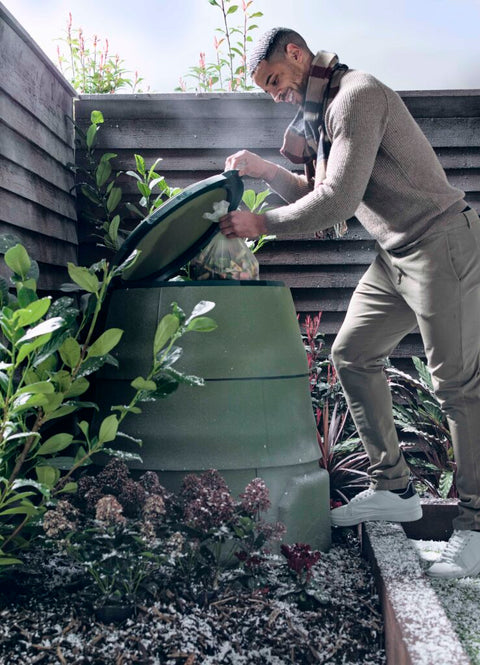
- Scrape food waste into the Bokashi bin. All food waste is accepted, including cooked food, meat, fish, dairy.
- By adding Bokashi bran to each input of food waste, natural beneficial microbes are introduced which accelerate the fermentation process. (Bokashi is Japanese for ‘fermented organic matter’).
- Because the waste ferments anaerobically (without air), there are no flies or smells.
- Once the bin is full, it's left sealed shut for two to three weeks while the contents are left to ferment. After this time, the contents are added to a garden composter, where it acts as an accelerator, or buried in the garden to break down and become soil-building compost.
- I gave my parents two Bokashi bins as most people use a twin-bin system. This meant they could be filling one bin while the other full bin was left to ferment.

A beneficial by-product of the process is a liquid that should be drained every few days from the tap at the bottom of the bin. This makes a great natural drain cleaner that controls smells and prevents algae build-up. You can also dilute it for use as plant feed.
Dad was a bit disappointed that the promised liquid drain cleaner wasn't appearing as quickly as he'd hoped. It can take a week for the liquid to develop while the the process gets going. Then he forgot to check for a few days and ended up with half a jugful of the stuff. He was highly delighted. I could tell no drains were going to get the chance to get blocked around these parts.

My parents reported that after a few instances of forgetting they had a new food waste bin, they quickly got the Bokashi habit. It's now unthinkable for them to throw food waste in the normal kitchen bin, as they did for more than 80 years.
Mum is now a complete Bokashi convert.
‘We all have to do something about the climate crisis,’ she says, ‘and this isn’t a lot to ask, especially when you consider the upsides.'
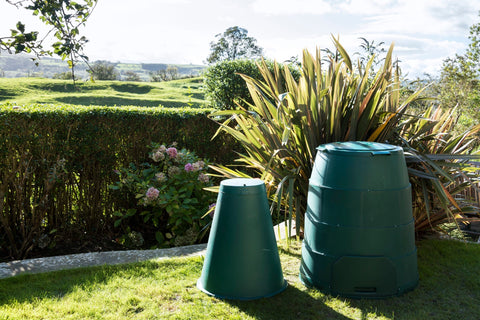
Instead of languishing in landfill, my parents' food waste is now happily accepted by our Green Johanna composter, where it speeds up the breakdown of our compost.
A win-win for all concerned.

Bokashi pre-compost mixture added to a Green Johanna composter.